Sacroiliac joint pain (SI joint pain): symptoms, tests and treatment
Sacroiliac joint pain sits deep in the buttock or lower back. The tests, the treatment options without surgery and when chiropractic helps.

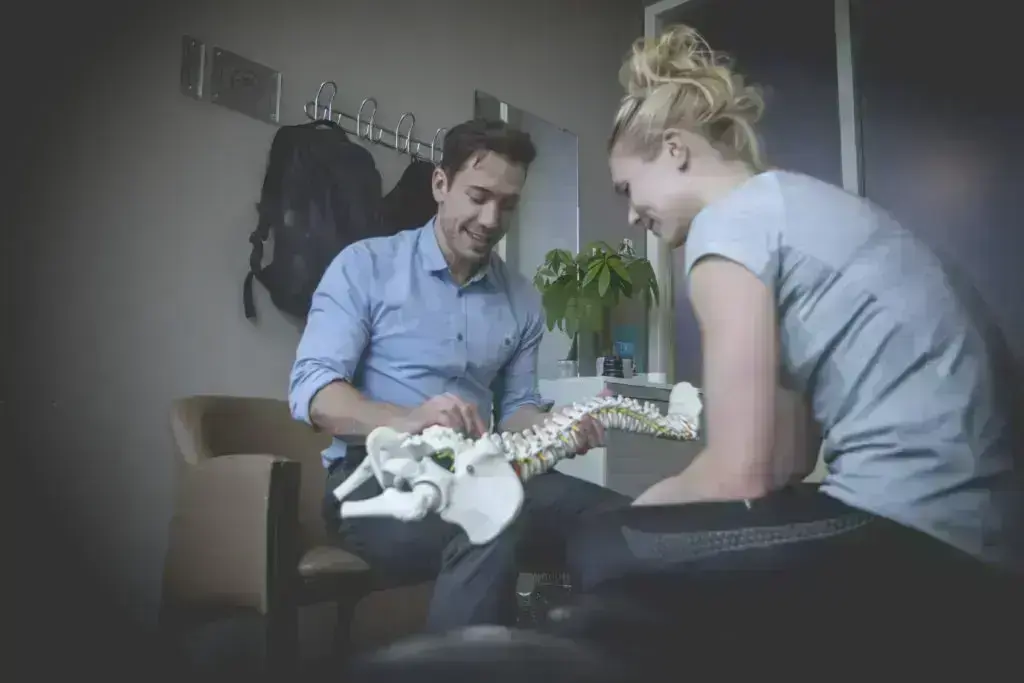
Short answer: The sacroiliac joint, or SI joint, connects your sacrum to your pelvis, low in the back on each side. Pain there usually sits deep in the buttock or low in the back, sometimes radiating into the groin or thigh. Most treatment options work without surgery, and joint manipulation is one of the first-line choices.
What is the sacroiliac joint and when does it hurt?
The sacroiliac joint sits between the sacrum at the base of your spine and the ilium. The ilium is the side wall of your pelvis. You have two, one left and one right, at the bottom of your back. Each moves very little: a few degrees, built to transfer the load of your upper body to your legs. Overload may cause pain there, in the joint and the tissue around it. That mix of heavy load and small motion makes the ligament and joint capsule a common source of pain.
In my practice I see sacroiliac joint pain mostly in three groups. People who lift heavy or sit for a long time in one position. People around a pregnancy, because the ligaments loosen and the pelvis moves more. And people with a leg length difference or an uneven gait, who load the joint asymmetrically day after day.
It is an underdiagnosed source of back pain: research estimates that the sacroiliac joint plays a role in roughly 15 to 30 percent of people with chronic lower back pain (source: Pain Practice). Same complaint, different source, different plan. Chronic pain in the spine and pelvis deserves a precise examination, so we always test whether the joint itself is the cause before treating anything. That examination also maps your range of motion.
Causes of sacroiliac joint pain
The causes of SI joint pain are usually overload, a changed load from pregnancy, a fall, or uneven loading from a leg length difference or an altered gait. Each cause irritates the same joint but needs its own plan. In about 35 percent of cases no clear cause is found, the Dutch guideline notes.
- Overload: heavy lifting, or sitting for a long time on a seat with poor support. Both make the pain worse over the week.
- Pregnancy and childbirth: looser ligaments and a pelvis that moves more.
- A fall or sudden twist: a single event that sprains the ligament around the joint.
- Uneven loading: leg length difference, scoliosis, or a gait that changed after hip or knee trouble.
With the years, the SI joints can also show age-related changes on a scan: osteoarthritis, the same wear that affects other joints. Those changes do not necessarily explain your pain, so we consider them alongside your symptoms and examination. Gentle manual therapy and mobilising exercises can then give pain relief.
Sacroiliac joint pain: symptoms and causes
Sacroiliac joint pain follows a recognizable pattern. The most common symptoms are pain in the lower back or deep in the buttock, on one side, sometimes radiating into the groin or the back of the thigh:
- Pain below the belt line: deep in the buttock or just above it, usually one side, rarely exactly in the middle.
- Radiation into the groin or thigh: often halfway down the leg, occasionally below the knee. The location alone does not settle the source. Tingling, numbness or weakness makes us check a nerve root first, as with a herniated disc or sciatica.
- Pain on transition movements: climbing stairs, rolling over in bed, getting out of the car, or standing up after sitting.
- A feeling of instability: the pelvis does not feel solid, sometimes as if you sink through one leg.
- Worse with long standing or one-sided lifting.
When the pain turns chronic, it feels like a dull, deep ache low in the buttock that flares on transitions. It is not the sharp shooting line of a pinched nerve.
Morning stiffness that eases during the day can fit arthritis. Lower back pain from the sacroiliac joint is one of the recognizable causes of low back pain. Stiffness that lasts over an hour, together with night pain, deserves medical assessment: that pattern can signal inflammation of the joint (see the section on sacroiliitis).
How is SI joint pain tested and diagnosed?
No single test proves the sacroiliac joint is the source. Research shows the tests carry weight in combination (source: JOSPT). The diagnosis comes from three things together: your story, a physical examination of the spine and pelvis with provocation tests, and ruling out other causes. This is how we work through it:
- History: where the pain sits, when it started, what makes it worse or better.
- SI joint provocation tests: the commonly used group is the thigh thrust, compression across the pelvis, distraction, Gaenslen and the sacral thrust. Each is designed to reproduce the pain you already know.
- Movement examination: how your spine, sacrum and pelvis move when you bend, walk and stand on one leg, alongside hip pain and groin pain that can mimic the same pattern. The FABER test adds information about the hip and pelvic region here.
Three or more positive out of five make the joint more likely as the pain source. They do not prove it on their own, and negative tests help us decide when to look elsewhere. The tests provoke pain you already have. And imaging alone does not confirm the diagnosis, because many people show joint changes on a scan without any pain. An image-guided anesthetic block of the sacroiliac joint, placed in hospital, is the reference test for this question: clear, temporary relief gives stronger evidence that the joint contributes to the pain. The result still needs interpretation alongside the rest of the assessment, because even a well-placed injection can give a false positive. It is a specialist step, for when treatment does not help enough, and it is not part of a first visit. A pain specialist or anesthesiologist performs it.
As a chiropractor I am trained to make this distinction. Radiology and diagnostic imaging, from X-ray to MRI, ran through my four-year chiropractic programme at the Canadian Memorial Chiropractic College. If you already have images from an earlier scan, we welcome them. They help us give a better prognosis, together with your symptoms and examination.
Sacroiliac joint dysfunction and chiropractic care
SI joint dysfunction is the term used when pain and difficulty with movement appear to involve the SI joint. It does not mean one test shows the joint out of place. Assessing painful movement and treating it with manual care is the core of our profession, and this is the complaint we work on directly. You can come to us as a first point of contact for suspected SI joint pain, without a referral. What a first visit looks like is described separately.
The treatment consists of gentle techniques on the joint and the muscles around it:
- Mobilisation: slow, repeated manual movements that make movement more comfortable.
- Manipulation: a short, targeted impulse on the joint, sometimes with a click you can hear or feel. A sound is not needed for the treatment to help. We do it only with your agreement and when it fits your situation.
- Muscle work around the joint: the buttock, back and pelvic muscles around the joint.
We review how you respond and adjust the plan as you improve. Exercises can be useful from the beginning, with the type, amount and range of motion changing through recovery. Physical therapy has its own value for rehabilitation and build-up, often alongside or after chiropractic care, sometimes from an early stage (more on the difference in our article chiropractor or physiotherapist).
Sacroiliac joint pain in pregnancy
Pregnancy is one of the most common triggers of sacroiliac joint pain. Pregnancy changes the load on the pelvis and can change how comfortably its joints move. Climbing stairs, rolling over in bed and stepping out of the car become more painful. The pain may flare after a long walk, and turning over in bed may cause pain at night.
Pregnancy-related pelvic girdle pain can be very painful and make everyday movement difficult, but it does not harm the baby. You do not have to simply put up with it. For most people it settles after childbirth. We treat with light techniques that fit the pregnancy, and we involve your midwife or GP when that is needed. For the full story on these complaints, see our page on pelvic pain during pregnancy, with symptoms and treatment for every phase. A pelvic belt, fitted via your midwife, can help in the meantime.
Sacroiliitis: when the joint is inflamed
You can tell your sacroiliac joint may be inflamed by three signals: morning stiffness lasting over an hour, night pain that wakes you, and complaints that improve with movement. None of them proves the inflammation: only assessment can. Sacroiliitis means inflammation in the SI joint, and it usually belongs to an inflammatory disease such as ankylosing spondylitis or psoriatic arthritis. Mechanical wear of the joint is a different story and gets treated as such. The pattern that raises the question:
- Stiffness in the lower back lasting over an hour, worst in the morning, around the sacrum.
- Night pain, often in the second half of the night.
- Better with movement, worse with rest.
- Sometimes painful joints elsewhere, or eye irritation.
If your pattern fits this picture, we discuss assessment with your GP, who can order blood tests and imaging and, if needed, involve a rheumatologist. Inflammatory disease belongs on that route, and medication advice is part of that conversation with your GP. If that pattern does not fit, we still consider the joint, lower back and hip before agreeing on a plan.
Sacroiliac joint pain treatment options: from first care to injections and specialist options
To relieve sacroiliac joint pain, three things do most of the work: movement within your pain limit, treatment of the joint itself, and stability exercises. The Dutch guideline on spinal pain complaints of the low back gives the frame (source: Richtlijnendatabase). Almost everyone with sacroiliac joint pain is treated without surgery. An American clinical review article names joint manipulation and exercise therapy explicitly as first-line treatment options (source: American Family Physician). The route we follow within that frame:

- Keep moving within your pain limit: long rest slows recovery. Daily movement continues, up to the pain that lingers.
- Chiropractic care: mobilisation or manipulation of the joint with muscle work around it, as described above.
- Exercises for strength and stability: aimed at the buttock and pelvic muscles. A physical therapist often guides this alongside or after chiropractic care. You get them in your treatment plan, matched to your examination.
- Pain relief: your GP can advise whether anti-inflammatory medication would help you stay comfortable enough to move in the first weeks.
- Specialist procedures: for persisting pain, a specialist may consider an image-guided injection into the joint. Anesthetic injections help investigate the source, a corticosteroid injection aims to relieve pain. In selected long-standing cases, a pain specialist may discuss radiofrequency treatment of the nerves that carry the pain signals.
- Surgery: not a routine treatment for SI joint pain. The Dutch guideline generally advises against operative treatment for this complaint (source: Richtlijnendatabase). Only in an exceptional case, after broad specialist assessment, would it be considered.

Frequently Asked Questions
What does a si joint pain treatment cost?
Your first visit costs €39. Follow-up consultations are €65 (single) or €55 per consult in a package; child consultations are €35. Most Dutch health insurers (partially) cover chiropractic care from the supplementary package.
How do I get rid of a painful SI joint?
You relieve sacroiliac joint pain by having the source examined and then treating it. An American clinical review names joint manipulation and exercise therapy as first-line options (source: American Family Physician). The provocation tests make the joint the likely source, and joint treatment with stability exercises is the standard route without surgery.
Is walking good for the sacroiliac joint?
Yes, walking is usually good for the SI joint: steady movement keeps the joint mobile and supports recovery. Build distance gradually and stop before pain that lingers. If you are unsure about a sport, discuss it during treatment.
What aggravates sacroiliac joint pain?
Sacroiliac joint pain is aggravated most by heavy one-sided lifting, long static standing, and sitting for hours without a break. Rolling over in bed can flare it at night. The Dutch guideline also names rising from a seated position as a provocation.
What should you avoid doing with sacroiliac joint pain?
Avoid those triggers, do not force through pain that lingers, and do not let anyone manipulate the joint without examining it first. The NHS also advises against staying in bed for long periods.
What is a sacroiliac joint injection?
An image-guided procedure performed by a specialist in hospital. An injection of local anesthetic helps investigate whether the joint contributes to your pain. A corticosteroid injection aims to relieve pain. The response is read together with your other findings. It is specialist care, not a first treatment.
Can sacroiliac joint pain radiate into the leg?
Yes, usually into the groin or the back of the thigh, occasionally below the knee. Tingling or numbness makes us check a nerve root first, as in a herniated disc.
What does chronic SI joint pain feel like?
Chronic SI joint pain feels like a dull, deep ache low in the buttock that flares on transitions such as stairs or rolling over in bed. Chronic means three months or longer, the definition NICE works with (source: NICE). It is not the sharp shooting line of a pinched nerve, and it can occasionally travel below the knee, so the location alone does not settle the source.
How long does it take for an SI joint strain to heal?
An SI joint strain usually settles within several weeks to a few months, depending on how severe the sprain is and how long the complaints have lasted. Some people improve over weeks, others need a plan that changes with them. Pregnancy-related pain settles for most people after childbirth, though the NHS notes it tends not to clear completely before the birth (source: NHS).
What is the difference between sacroiliac joint dysfunction and a herniated disc?
Dysfunction gives pain around the joint itself, low and mostly one-sided. A herniated disc more often radiates below the knee with tingling or numbness. The examination makes the difference visible.
Can a chiropractor help with sacroiliac joint pain?
Yes. Assessing and treating complaints of the back and pelvis is core chiropractic work, and guidelines list SI joint manipulation among the initial treatment options. We screen for the causes that need medical care first, and refer on when another route is genuinely better. More on safety and training: are chiropractors safe. How it works in practice, you can read in the reviews.
What exercises can help relieve sacroiliac joint pain?
Two groups help: mobility exercises first (gentle knee-to-chest movements and pelvic tilts), then stability work for the buttock and pelvic muscles. Walking bridges the two. Cochrane's 2021 review found moderate-certainty evidence that exercise eases pain in chronic low back pain compared with no treatment (source: Cochrane). You get a matched set in your treatment plan, because the right exercise depends on your examination.
Is an SI joint belt useful?
It can be, mainly around pregnancy or a clearly unstable feeling: a pelvic belt supports the joint temporarily. It does not replace treatment of the movement itself.
Will my sacroiliac joint pain return?
It can, because the cause (load, gait, pregnancy) can return too. A stable pelvis, strong buttock muscles and a sensible load build-up lower the chance. We plan that with you.
Will my insurance cover treatment for sacroiliac joint pain?
Most Dutch insurers cover chiropractic care from the supplementary package. The intake costs 39 euros, see our rates. Our coverage check shows in a minute what your policy covers.
When should I escalate to urgent care?
New numbness around the genitals or buttocks, trouble passing urine, loss of bladder or bowel control, or severe worsening leg weakness: seek help immediately. Call your GP's urgent line during office hours, or the out-of-hours GP service when the practice is closed, and the emergency services only in a life-threatening emergency. Fever with back or pelvic pain, unexplained weight loss, or complaints after a serious accident: contact your GP promptly, the same day or the next.
When to escalate to urgent care
Seek urgent care immediately if you develop new numbness around your genitals or buttocks, have trouble passing urine, lose control over your bladder or bowels, or develop severe or worsening leg weakness. These are emergency signals: call your GP's urgent line during office hours, or the out-of-hours GP service (huisartsenpost) when the practice is closed. Call 112 in a life-threatening emergency, not as the default for these signals. If you are already under hospital care, contact your treating specialist or the department instead. Do not wait for a chiropractic appointment for these.
Contact your GP promptly, the same day or the next, for fever together with back or pelvic pain, or for pain that starts after a serious fall or accident. Unexplained weight loss alongside persisting pain also deserves a prompt GP assessment, though it is not the same level of urgency.
For non-urgent questions, or when you are unsure what your complaint needs, call or message us: we help you judge it and refer you on ourselves. If you have any of the emergency signals above, call your GP's urgent line, or the out-of-hours GP service outside office hours.
Next time you search, get an answer this clear again — add Embody to your preferred sources.