Chiropractor for sciatica: take the pressure off your sciatic nerve
Nerve pain in the leg? Worse when you sit or cough? The nerve is pinched — Our specialty. Intake & posture analysis included. No waiting list.

The short answer
Chiropractic treatment goes straight at the mechanics of sciatica: we find what is pressing on the nerve, take the load off it, and get the joint and the nerve moving again. The research backs the profession-specific version of this work — a large outcome study of this treatment followed people whose sciatica was caused by a disc herniation pressing on the nerve, and nine in ten of them reported real improvement — and it's backed by the UK's NICE guidelines on sciatica care — followed widely across countries — which name spinal manipulation, the core chiropractic technique, inside recommended care. What that means in the treatment chair: most people notice the movement coming back first.
You know the picture: a line of pain from your buttock to your calf, a leg that hums with pins and needles when you sit, a foot that feels unreliable on the stairs. Fear arrives with it: is something permanently damaged? Could this end in injections or surgery? Sciatica is a mechanical problem — something pressing on a nerve — and mechanical problems can be treated. Most cases settle within weeks to a few months, and what you do while the nerve settles decides how those weeks feel.
Read on for exactly what that looks like. And a first visit costs €39 — no referral needed.
What is sciatica?
Sciatica is not a disease. It is a pattern: pain, tingling, or numbness that follows the sciatic nerve, usually from your lower back, through your buttock, and down the back of one leg. The sciatic nerve is the longest nerve in the body, and it does much of the work of your leg — which is why a small problem at a nerve root in your spine can produce pain all the way down at your foot.
Treat sciatica as a signal rather than a diagnosis. It tells you something is pressing on or irritating the nerve. The assessment exists to find out what, because what is pressing decides what helps.
And here is a fact that removes a lot of the dread at once: in the two big studies that compared them head-to-head, people who chose surgery for a disc herniation got faster relief in the first months, but a year and more later, the people who stayed out of the operating room had done just as well.
Symptoms of sciatica
Sciatic nerve pain usually affects one side. Recognise one or more of these?
- a sharp, burning, or electric pain down the back of the leg, sometimes into the foot
- pain that flares when you sit, cough, or sneeze
- tingling or pins and needles in the leg or foot
- numbness in patches along the leg
- weakness — a foot that does not lift properly, stairs that suddenly feel unsafe
- lower back pain that comes with the leg pain, usually milder
The pattern tells us more than the intensity. Pain that follows a line down one leg behaves differently from pain that stays in the back alone — if that is all you have, this is a different conversation.
What causes sciatica?
Most sciatica comes from a herniated disc: the soft cushion between two vertebrae that can bulge and press on a nerve root. Pressure on the sciatic nerve can also come from a narrowed spinal canal (spinal stenosis), a vertebra that has slipped out of place, or the piriformis muscle deep in your buttock. Sciatica and pregnancy often meet the same way — changed load and posture can do it too.
Each cause asks for a different answer, and no two cases press in the same place. An exam that maps how your spine and nerves move beats guessing from a symptom list.
Relief from sciatica pain: what helps today
Old advice said rest in bed until the pain left. That advice is outdated — bed rest slows recovery, and movement is the faster route out. The basics that carry weight:
- carry on with your normal activities as far as the pain allows
- walk a little, several times a day
- hold heat packs to the painful areas
- do not sit or lie down for long stretches, even when moving stings. Moving is not harmful to the nerve; it is part of the treatment
The Cochrane review comparing bed rest with staying active settled that question years ago.
When to see a chiropractor for sciatica
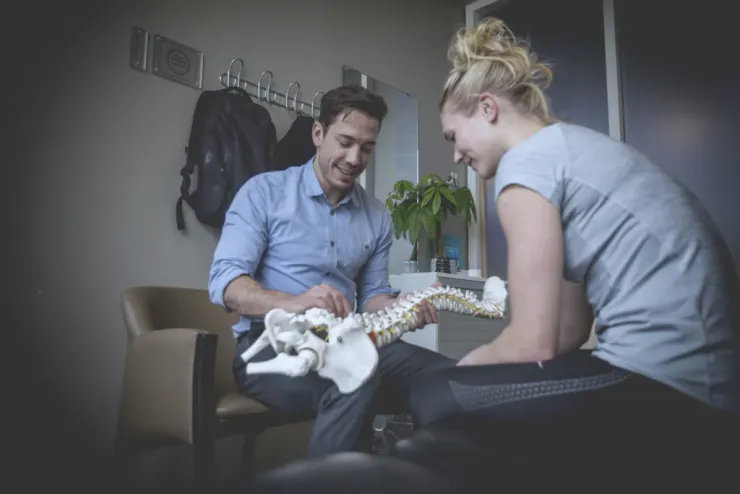
Get an assessment when the sciatica has not started easing after a couple of weeks, when it keeps getting worse, or when it starts steering your work and sleep. You need no referral — a chiropractor is a primary-contact practitioner, and the first visit is a full intake with a physical examination. We map how your spine, joints, and nerves move, and tell you whether chiropractic treatment can help your case.
A scan is usually not needed first, because the exam decides when imaging adds something. On the commitment, one piece of reassurance: one study of people who had sciatica for more than a month found three manipulation sessions, one week apart, produced clear improvement in daily life compared with standard care.
How chiropractic treatment helps sciatica
Treatment aims at the mechanics around the nerve — that is exactly where chiropractic is strongest. With gentle, precise chiropractic adjustments we mobilise the stiff segments of your lower spine, ease the load on the irritated nerve root, release muscles that press on it, and restore the movement the pain guarded. In our practice, what people notice first is usually the movement coming back. A large outcome study in our field followed 148 people with disc herniations confirmed on MRI, treated with the same family of hands-on care we use here, and nine in ten reported real improvement at three months, with most still doing well a year later. A treatment plan adds the active half: specific exercises that keep the nerve gliding and take pressure off it, plus plain guidance on sitting, lifting, and the loads your day carries. Most people with sciatica start with a single first visit: we examine, treat if it is safe and useful, and agree the plan with you. Nobody is signed up for anything open-ended. And timing matters too: across millions of patient records, people who started chiropractic care in the first month of back pain ended up needing prescription painkillers far less often than those who waited.
Does it hold up? A 2026 Cochrane review of spinal manipulation for chronic low back pain found a small improvement in pain and a medium improvement in function, with no serious complications reported — and for chiropractic specifically, a randomised study of chiropractic treatment for hip joints already awaiting surgery found less pain and better function. The NICE guideline (the UK's national clinical guideline body, the equivalent of the Dutch care standards) names spinal joint manipulation and soft tissue release, the core chiropractic techniques, among the care options for low back pain with sciatica, inside a treatment package that includes exercise, which is exactly how we build it. For sciatica alone the evidence is thinner, and we say so during your assessment.
What patients tell us
Sciatica takes over your days. Here is what one patient wrote after treatment:
“Had 12 treatments for lower back pain; you are helped professionally with a treatment plan. Very satisfied and pain-free by now! I recommend it to anyone dealing with all kinds of pain complaints.”

Book a chiropractor for sciatica
Book a first visit at Embody Health Chiropractie — Rotterdam (Nieuwe Binnenweg 344), Alphen aan den Rijn, or Amersfoort. A first visit is €39 and needs no referral. More than 2,500 patients over 12+ years rate us 4.9/5 on Google. You get an honest recommendation, even when chiropractic is not the right answer for your sciatica. Call +31 172 26 3073 or book online.
Good to know: most Dutch health insurers (partially) reimburse chiropractic care from your supplementary package, and your deductible stays untouched.
Check your coverage
Frequently Asked Questions
How long does sciatica take to get better?
Most cases improve within weeks to a few months — and treatment is about making those weeks count. Sciatica can come back once you have had it, so if home treatment has not moved the pain after a few weeks, or it keeps returning, the first visit exists to answer exactly that.
What does treatment for sciatica cost?
A first visit is €39. That buys the intake, the examination, and a straight assessment of what chiropractic can do for your case. A single follow-up is €65, and most Dutch health insurers partially reimburse chiropractic care from the supplementary package without touching your deductible — see prices and what your insurer covers.
Do I need an MRI scan before treatment?
No. Guidelines advise against routine imaging for low back pain and sciatica, because a scan only changes the plan when the exam gives it a reason. If your case needs imaging, we will tell you and point you to the right route.
Is chiropractic treatment safe for sciatica?
In the way we practise it, yes: gentle, precise treatment aimed at movement, not at forcing anything. We screen for serious causes before treatment, and temporary muscle soreness afterwards is normal and passes quickly. In the research, reported side effects are limited to that kind of temporary soreness.
Chiropractor or physiotherapist for sciatica?
Both are trained in movement and exercise, and many people combine the two. Chiropractic adds the hands-on part: correcting how the joints of your spine move, so the nerve root gets less load. The strongest evidence puts spinal manipulation inside a treatment package that includes exercise — which is how we build care here.
When sciatica needs same-day attention
Sciatica itself is rarely an emergency, but a few signals change the plan for the day.
Your chiropractor is a primary-contact practitioner — sciatica like yours is what we assess daily, often before anyone else does. That is exactly what we're trained for: we screen for the rare serious causes, and most of the time the answer is good news. Most sciatica is painful but harmless and usually clears up on its own. Only a few signals are worth flagging on your own:
- loss of bladder or bowel control
- numbness around your bottom or genitals
- weakness in the leg that is getting worse quickly
- pain that starts right after a serious fall or accident
- fever and feeling unwell alongside the back pain
These deserve attention the same day. Contact us — we are reachable by phone 24/7, and our front desk alerts the chiropractor straight away when a call looks urgent. We will examine you and tell you straight whether your back needs hospital care, with no referral and no detour. Not sure? Your GP is happy to help you think it through — and so are we.
Sources
- NHS: Sciatica — symptoms, causes and treatment (page reviewed 3 December 2024)
- NICE guideline NG59: Low back pain and sciatica in over 16s — assessment and management (updated 29 July 2026)
- Cochrane review: spinal manipulative therapy for adults with chronic low back pain — 76 trials, 11,866 participants; small pain and medium function improvement, no serious complications
- Cochrane review: advice to rest in bed versus advice to stay active for acute low-back pain and sciatica
- RCT: chiropractic treatment for hip osteoarthritis awaiting surgery (2010) — less pain and better function
- Prospective cohort: chiropractic SMT for MRI-confirmed lumbar disc herniations (2014) — 148 patients; 90.5% improved at 3 months, 88% at 1 year
- RCT: spinal manipulation for subacute and chronic lumbar radiculopathy (2021) — three sessions; between-group improvement significant in all measurements
- Systematic review and meta-analysis: chiropractic care and opioid use (2026) — 64% lower odds of an opioid prescription; strongest when care starts within the first 30 days
- Surgery vs prolonged conservative care for sciatica — faster early relief only, no significant long-term difference (also 5-year follow-up)
- MedlinePlus: Sciatica — summary and treatment options
Next time you search, get an answer this clear again — add Embody to your preferred sources.