Low Back Pain: Lower Back Pain Symptoms and What to Do
Sudden back pain is alarming but rarely an emergency — most cases improve within weeks. What helps, what to avoid, and when to see your GP.


Sudden back pain can be frightening — but it is almost never an emergency, and most cases improve within weeks. What helps is movement, not bed rest. Here's what to do, what to avoid, and the signs that do warrant a GP.
What is sudden lower back pain?
Sudden lower back pain — doctors call it acute low back pain or lumbago — usually strikes without warning: you bend, twist or lift something, and a sharp jab in your lower back stops you mid-movement. People often say they "threw their back out". The muscles around the lower back cramp, straightening up is hard, and every movement feels as if the back is locked. It hurts and can be frightening, especially the first time it happens.
The good news: sudden back pain is not a diagnosis, but the everyday name for acute low back pain that comes on suddenly — intense low back pain without pain radiating into a leg. Your back is strong and can take a lot: with sudden back pain, almost nothing is permanently damaged. The pain typically improves clearly within a few days, and most people recover within a few weeks. The pain is often worst in the first two days and then eases gradually. For a fuller picture, read our article about low back pain and sciatica.
Lower back pain symptoms
The symptoms of sudden lower back pain are usually easy to recognise:
- sudden, sharp pain in the lower back that "shoots" in
- stiffness and cramping of the back muscles in the lower back
- pain in the lower back when moving, bending or twisting
- trouble straightening up, or a feeling that the back is tilted
The pain often stays in the back itself, spreading toward the buttock or the area around the pelvis. Does the pain radiate down the back of one leg? Then the sciatic nerve — one of the largest nerve roots heading to the leg — may be irritated, which can mean sciatica. Pain radiating into one leg is not a red flag in itself, but it is worth assessing together with a care provider.
What causes sudden lower back pain?
A muscle strain is the most common cause. Sudden back pain often follows an awkward movement — bending, lifting and twisting in one motion, or an unlucky turn in the lower back. Overloading the back muscles and poor posture, such as long hours of sitting badly, may contribute to back pain. Sometimes a small injury sits behind it: a sprain, a tiny tear in the back wall of an intervertebral disc, or an overstretched muscle or ligament around the lower back.
The causes of lower back pain are not always clear. Sudden back pain usually follows an unexpected movement, but it can also appear after a heavy day of work or long hours in one position. We do not always know why one movement triggers the pain and another does not. We do know that the back usually recovers fully, and that back pain at some point in life is one of the most common health complaints — and that after a first episode, back pain can return. For most people this is short-term back pain that settles on its own; for pain that lasts longer than three months, care providers speak of chronic pain. Chronic back pain needs a proper assessment rather than waiting it out.
What can you do yourself?
The most important advice for sudden lower back pain: keep moving, within the limits of the pain. Staying active — walking, cycling or swimming — helps the back recover faster than resting in bed. Light movement also helps reduce pain and stiffness. A Cochrane review comparing bed rest with staying active in acute low back pain and sciatica found that advice to stay active works better than bed rest. Listen to your body and build up activities gradually.
Heat on the lower back can relax the muscles and offer temporary pain relief. For pain that keeps you from moving, talk briefly with your GP or pharmacist about over-the-counter pain relievers such as paracetamol. If your back pain worsens or has not clearly improved after one to two weeks, it is worth having a chiropractor or your GP take a look.
What should you avoid?
- days of bed rest: it makes the back stiffer instead of better
- pushing through sharp pain, especially when lifting something heavy
- lifting and twisting in one movement while the pain is sharp
- long hours in a bad sitting position on a soft sofa or office chair
Most movements are safe with sudden back pain; only movements that make the pain sharply worse are worth taking easier for a while.
We see backs like yours every day — your chiropractor works as a primary-contact practitioner, and a first visit is a full intake with a physical examination. Most sudden back pain is harmless and usually clears up on its own. Four signals are worth flagging on your own:
- loss of bowel or bladder control, or numbness in the saddle area
- progressive weakness or paralysis in a leg
- back pain after an accident or fall
- fever or signs of infection
Any of these? Don't wait for an appointment — talk it through with your GP or with us that same day. For anything else, you don't need a referral or a stop anywhere first: come in and we'll assess it together.
Can chiropractic or physiotherapy help with sudden back pain?
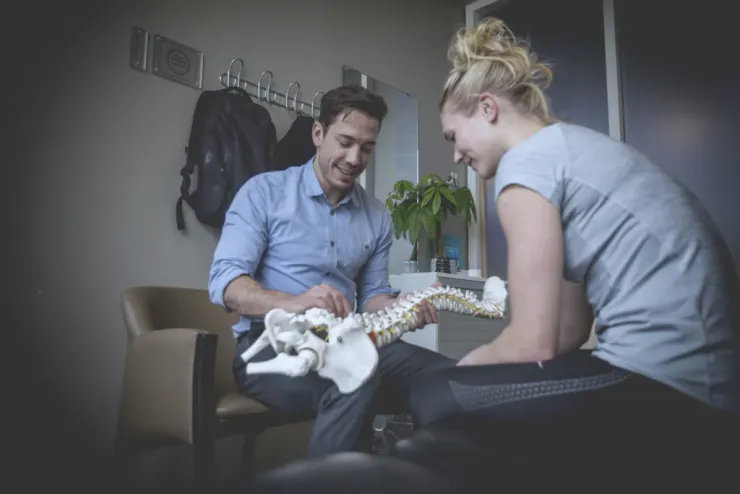
Yes, and there are good experiences with both. Which treatment options fit depends on your pattern of complaints. We start with an intake and a physical examination of your back — the intervertebral discs, spinal joints and muscles of the lower back get specific attention, and we check the movement of the spine as a whole. Then we build a personal treatment plan together, focused on restoring movement in the lower back, reducing muscle tension and regaining trust in your back, with rehabilitation exercises you can continue at home. Chiropractic care can help your back move smoothly again — we see many people benefit from this approach. What the approach can mean for you, we determine honestly together during your first visit. The evidence supports that: a 2017 systematic review in JAMA found spinal manipulative therapy is associated with modest improvements in pain and function in the first six weeks of acute low back pain, and the American College of Physicians guideline for low back pain names spinal manipulation as one of the first-line nonpharmacologic options.
“Had 12 treatments for lower back pain; you are helped professionally with a treatment plan. Very satisfied and pain-free by now! I recommend it to anyone dealing with all kinds of pain complaints.”

Chiropractic care falls under supplementary health insurance: most Dutch insurers reimburse (part of) the treatment, often without touching your deductible. You do not need a GP referral. Your first visit costs €39; a single follow-up consultation costs €65 and a consultation in a recovery package €55. Child consultations cost €35. See what your health insurance covers and the prices.
Sudden back pain or herniated disc?
Sudden back pain stays in the back: intense low back pain without leg pain. The largest nerve roots to the leg run from the lower back. With a herniated disc, pressure or an inflammatory reaction on a spinal nerve can make the pain radiate down the back of one leg, sometimes with tingling or numbness. When those signals appear, we look at them specifically during the examination. Read more about radiating pain from a herniated disc.
Other possible causes of low back pain include spinal stenosis — a narrowing of the spinal column that can press on the spinal cord and nerves — arthritis, and wear and tear of the five vertebrae and the sacroiliac joints. Depending on the cause, your doctor may suggest imaging studies to support the choice of the appropriate treatment. These conditions are less common and usually develop gradually rather than suddenly.
How to prevent lower back pain
You cannot prevent sudden back pain completely, but you can reduce the chance of it and of recurring back pain: lift with a straight back and the load close to your body, alternate sitting and standing, and keep your back muscles strong with regular movement and targeted exercises. If you sit a lot, stand up every 30 to 45 minutes.
Which exercises help?
We choose exercises for sudden back pain based on your pattern: is there mainly muscle tension, stiffness, or too much load and too little recovery? Exercises always start gently and within the pain limits. Walking is a safe start for most people with sudden back pain. Light mobility exercises, such as a pelvic tilt on your back, can loosen the lower back. Different exercises work for different people; which exercises are safe and fitting for you we prefer to decide after examining your back.
Book an appointment for sudden back pain
Would you rather be free of the pain sooner than later? Plan a first visit at Embody Health Chiropractie. You are welcome in Rotterdam (Nieuwe Binnenweg 344), Alphen aan den Rijn and Amersfoort. Call via WhatsApp: +31 172 26 3073 or book online directly.
Next time you search, get an answer this clear again — add Embody to your preferred sources.
Frequently Asked Questions
What should I do when I get sudden back pain?
Keep moving — walking, cycling or swimming helps the back recover, while lying still weakens the back muscles and slows healing. Build up activities gradually and don't force anything. For pain that keeps you from moving, talk briefly with your GP or pharmacist about pain relief. Most sudden back pain is harmless and resolves within days to weeks.
How long does sudden back pain last?
Most people recover within a few days to weeks. The back is stiff and painful at first, then recovery builds gradually. If the pain lasts longer or keeps returning, a chiropractic or medical assessment is a logical next step.
Is movement good or bad for sudden back pain?
Movement is almost always better than lying still. Walking, cycling or swimming support recovery; long bed rest weakens the back muscles. Listen to your body and build up activity gradually.
When should I see a doctor for sudden back pain?
See your GP with signals such as loss of bowel or bladder control, numbness in the saddle area, progressive weakness or paralysis in a leg, back pain after an accident or fall, or fever with signs of infection. If you're unsure, your GP is happy to help you think it through.
Can a chiropractor help with sudden back pain?
Yes. During your first visit (€39, no GP referral) we examine your back and the mobility of your spine and build a personal treatment plan together. Most Dutch health insurers reimburse chiropractic care from supplementary insurance, often without touching your deductible.
Sources
- Cochrane review: bed rest versus advice to stay active in acute low back pain and sciatica (2025) — staying active helps more than bed rest
- Systematic review: the natural course of acute low back pain (2024) — most episodes improve substantially within six weeks
- NICE guideline for low back pain and sciatica (NG59) — when a medical assessment is needed
- Systematic review (JAMA, 2017): spinal manipulative therapy for acute low back pain — modest improvements in pain and function in the first six weeks
- American College of Physicians guideline (2017): noninvasive treatments for low back pain — names spinal manipulation as a first-line option
Next time you search, get an answer this clear again — add Embody to your preferred sources.